What are the physical properties and storage conditions of cooling gel pads at room temperature?
Cooling gel pads have become an important new material product with widespread application in modern home furnishings, medical treatments, sportswear, and automotive accessories. Since its establishment in 2009, Nantong Freezing Memory New Material Technology Co., Ltd. has leveraged its deep research and development capabilities in new materials and a comprehensive ODM service system to provide high-quality, high-performance gel sheet products to customers worldwide.
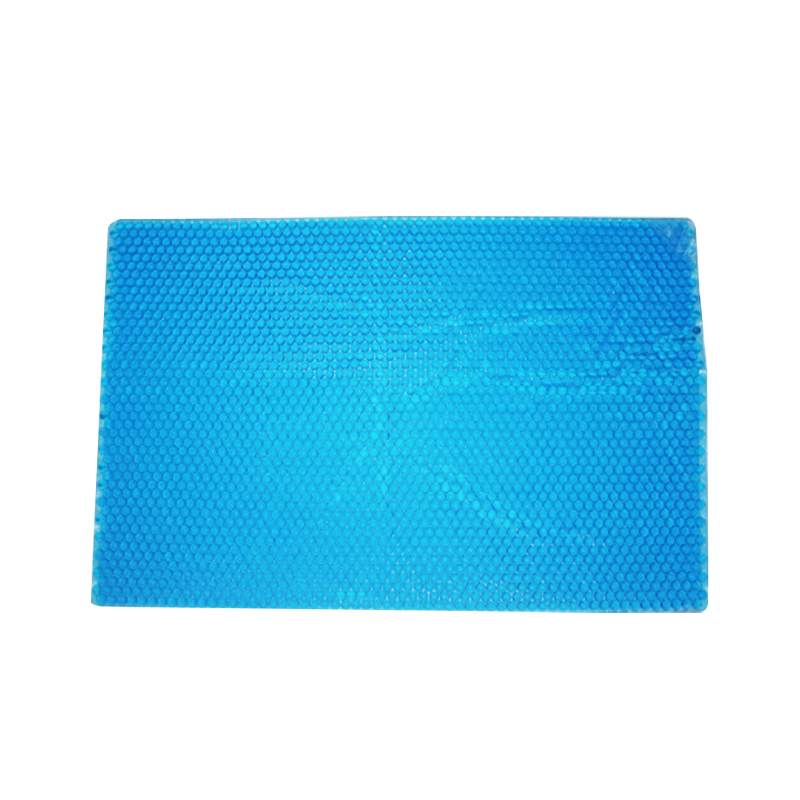
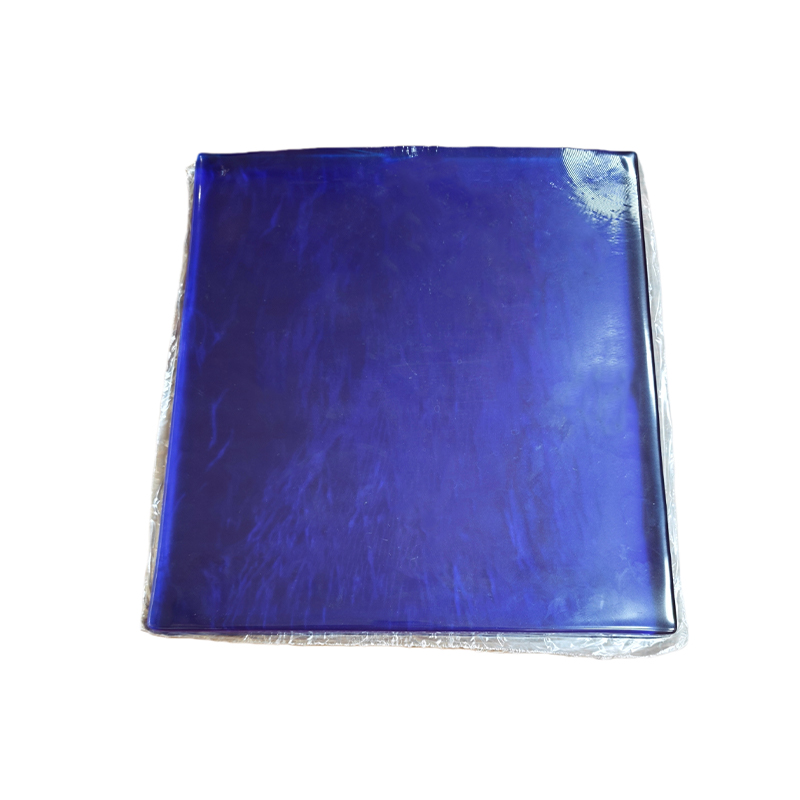
From a materials science perspective, cooling gel pads are primarily composed of polymers such as silicone, polyurethane, and thermoplastic elastomers (TPEs). They exhibit significant flexibility and elasticity at room temperature (approximately 20°C to 25°C). Nantong Freezing Memory New Material Technology Co., Ltd.'s production lines cover a wide range of polymer materials, enabling precise control of gel sheet hardness, thickness, and shape according to customer needs, achieving diverse performance capabilities from soft, conformable to structural support. At room temperature, cooling gel pads typically appear as a translucent or milky gel with a soft, stretchy feel and a certain degree of stickiness, allowing them to adhere securely to various surfaces without the need for additional adhesives.
The physical properties of a gel sheet are closely related to its molecular structure. Silicone-based cooling gel pads primarily feature a three-dimensional cross-linked network, maintaining stable softness and excellent resilience at room temperature. Polyurethane-based cooling gel pads rely on hydrogen bonds and physical cross-links between molecular chains, exhibiting high plasticity and cushioning properties at room temperature. TPE cooling gel pads exhibit both thermoplasticity and elasticity, maintaining a certain degree of shape memory at room temperature while ensuring long-term use without noticeable hardening or brittle cracking. Nantong Freezing Memory New Material Technology Co., Ltd. utilizes meticulous raw material formulations and advanced automated production lines during production to ensure that each gel sheet possesses consistent physical properties at room temperature, meeting the diverse needs of diverse applications such as home, office, automotive, and medical.
Cooling gel pads are sensitive to environmental conditions when it comes to storage. Proper storage can effectively extend product life and maintain stable performance. First, avoid prolonged exposure to high temperatures or direct sunlight, as excessive heat can cause excessive molecular chain movement in the gel sheet, leading to deformation or reduced viscosity. Second, protect the gel sheet from contact with sharp objects or chemical solvents to prevent surface damage or degradation of material properties. Ideal storage conditions are dry, well-ventilated, and at room temperature (around 20°C). Avoid contact with corrosive substances such as strong acids and alkalis. Nantong Freezing Memory New Material Technology Co., Ltd. utilizes compartmentalized management and standardized packaging in its factory warehouse to ensure that the cooling gel pads maintain their original flexibility and adhesive properties before shipment, while minimizing the impact of external factors on material properties.
In addition, cooling gel pads stored for long periods should be protected from heavy stacking to prevent physical deformation or permanent indentations. To address different application scenarios, the company has developed cooling gel pads with a mild pressure-resistant design to prevent deformation during transportation and storage. For shipping, companies typically use air-cushioned interlayers or high-strength paper boxes to ensure the physical and aesthetic qualities of cooling gel pads.
What are the advantages and limitations of cooling gel pads compared to traditional panty liners and adhesive tape?
First, in terms of material properties, cooling gel pads are composed of high-molecular polymers, including silicone, polyurethane, and TPE, offering advantages in flexibility, moldability, and adhesion. Traditional panty liners are primarily made of foam, cotton fiber, or polyester fiber, while adhesive tape uses pressure-sensitive adhesive and a fabric or film backing. cooling gel pads offer excellent cushioning and form-fitting properties despite their relatively thin thickness, while traditional panty liners often require increased thickness to achieve similar support, and adhesive tape offers limited cushioning and pressure-distribution capabilities.
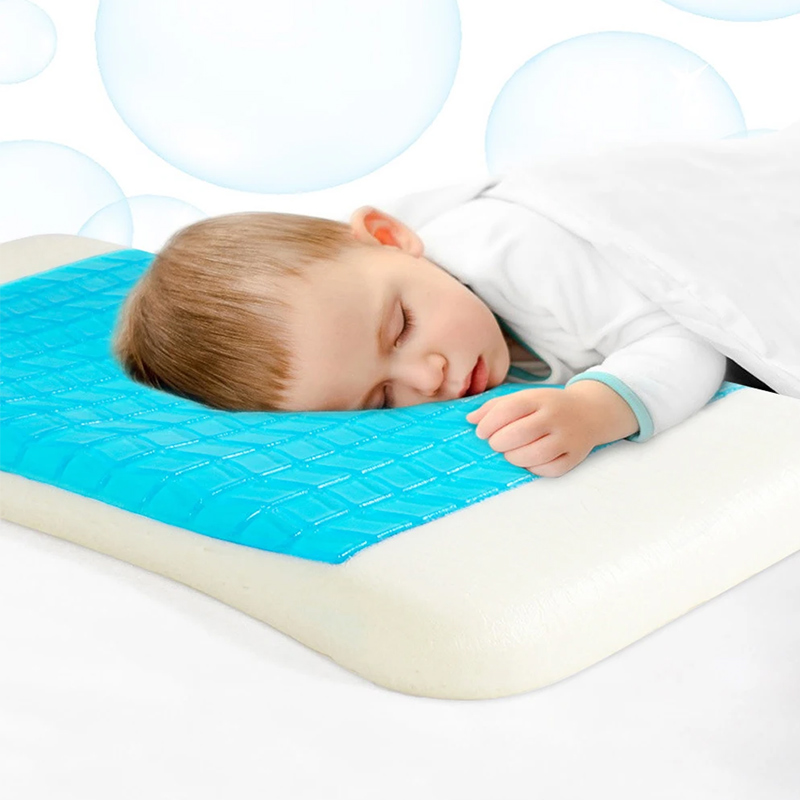
Second, cooling gel pads offer significant advantages in terms of comfort and conformability. Their softness and elasticity allow them to conform closely to the curves of the human body or surfaces, evenly distributing pressure and reducing localized stress points. This is particularly important in sleep products, medical braces, and for extended periods of chair use. In contrast, traditional panty liners have lower elasticity and resilience, making them prone to indentation or insufficient rebound. Adhesive tape, due to its high rigidity, may cause friction or local discomfort with long-term use.
Cooling gel pads demonstrate excellent durability and reusability. Nantong Freezing Memory New Material Technology Co., Ltd. utilizes automated production lines and rigorous quality control to ensure that cooling gel pads maintain their stable performance even after repeated compression, bending, and washing. The fiber structure of traditional panty liners is susceptible to compression, water absorption, and deformation during use, while the adhesiveness of adhesive tape decreases with frequency of use and changes in ambient temperature and humidity.
However, cooling gel pads also have limitations. Their production costs are higher than those of traditional panty liners and adhesive tape, and they require strict storage and transportation environments, such as avoiding contact with high temperatures and sharp objects. Furthermore, for applications requiring high-strength adhesion or chemical resistance, the choice of gel sheet requires careful evaluation based on the material type. Nantong Freezing Memory New Material Technology Co., Ltd. provides customized gel sheet solutions for different applications, optimizing product performance through optimized material formulations and surface treatment technologies. The following table compares cooling gel pads with traditional panty liners and adhesive tape based on key parameters, highlighting their core advantages and limitations:
|
Parameter / Property
|
Gel Sheet
|
Traditional Pad
|
Adhesive Tape (Glue-based)
|
|
Material Composition
|
Silicone, PU, TPE
|
Foam, Cotton, Polyester Fiber
|
Pressure-sensitive adhesive + Fabric/Film
|
|
Thickness
|
Thin, 2–10 mm, customizable
|
Generally thicker, 5–20 mm
|
Very thin, 0.1–2 mm
|
|
Elasticity & Flexibility
|
High, conforms to contours
|
Moderate, limited conformity
|
Low, limited stretch
|
|
Pressure Distribution
|
Excellent, reduces local stress points
|
Moderate
|
Poor, localized pressure
|
|
Reusability
|
High, stable after multiple uses
|
Moderate, may compress/deform
|
Low, adhesive loses stickiness
|
|
Comfort & Skin Friendliness
|
Soft, non-irritating
|
Moderate, potential friction
|
Can cause skin irritation
|
|
Durability
|
High, resistant to compression and wear
|
Moderate, may deform over time
|
Low, adhesive can degrade
|
|
Cost
|
Relatively higher, but performance-optimized
|
Low
|
Low
|
|
Storage Requirements
|
Moderate, avoid high temperature & sharp objects
|
Low
|
Low, protect from dust
|
|
Application Scope
|
Home, travel, medical, automotive, office
|
Limited to cushioning
|
Limited to adhesion/fixation
|
What are the advantages and disadvantages of the main raw materials for cooling gel pads?
Cooling gel pads primarily use silicone, polyurethane (PU), latex, and thermoplastic elastomer (TPE). Each material has its own unique characteristics in terms of physical properties, comfort, durability, cost, and application scenarios.
Silicone
As one of the core materials for cooling gel pads, silicone is known for its high elasticity, resistance to high and low temperatures, and strong chemical stability. At room temperature, silicone cooling gel pads are soft and comfortable to the touch, maintaining their elasticity for extended periods. They are suitable for applications requiring a conformable fit to the body, such as medical pads, sleeping products, and car seat cushions. However, their disadvantages are relatively high raw material costs and processing challenges, often requiring specialized equipment and process control to ensure uniformity and stability in the finished product. Nantong Freezing Memory New Material Technology Co., Ltd.'s automated silicone production line utilizes precise temperature control and mixing processes to enable mass production of high-quality silicone cooling gel pads.
Polyurethane (PU)
PU material offers excellent elasticity and cushioning properties, while its hardness and rebound force can be adjusted by adjusting its formulation. PU cooling gel pads perform well in applications such as sports protective gear, insoles, and office seat cushions, effectively dispersing pressure and providing comfortable support. However, their disadvantages include slightly lower chemical resistance and the potential for aging and discoloration from prolonged exposure to high temperatures or strong sunlight. Furthermore, PU absorbs moisture very well, requiring careful attention to moisture protection during storage and transportation. The company utilizes a moisture-proof sealing process in the production of PU cooling gel pads to ensure long-term product stability.
Latex
Latex cooling gel pads offer excellent softness, natural elasticity, and breathability, providing a skin-friendly feel. They are suitable for home mattresses, pillows, and massage products. However, latex carries a potential allergy risk and may cause discomfort to some people. Its high-temperature resistance and durability are slightly lower than those of silicone and PU, and its storage requirements are more stringent, requiring protection from prolonged direct sunlight and high temperatures. Nantong Freezing Memory New Material Technology Co., Ltd. uses scientific formulas and surface treatment technologies to effectively reduce the risk of latex cooling gel pads and improve their durability.
Thermoplastic Elastomer (TPE)
TPE material combines thermoplastic and elastic properties, making it easy to process and mold, and can achieve a variety of looks and feels. TPE cooling gel pads are widely used in home, automotive, and office applications, offering high resilience and durability at a relatively low cost. However, their disadvantage is limited high-temperature resistance, which can lead to softening and deformation under prolonged high-temperature conditions. Furthermore, some TPE materials lack sufficient adhesion, requiring process optimization or surface treatment to enhance adhesion. The company's multiple automated TPE production lines enable mass production of high-performance, customized TPE cooling gel pads.
|
Material / Property
|
Advantages
|
Disadvantages
|
Typical Applications
|
|
Silicone
|
High elasticity, durable, temperature-resistant, non-toxic
|
Higher cost, complex processing requirements
|
Medical pads, sleep products, automotive seats
|
|
Polyurethane (PU)
|
Excellent cushioning, adjustable hardness, good elasticity
|
Moderate chemical resistance, prone to aging under high temperature
|
Sports gear, insoles, office cushions
|
|
Latex
|
Soft, breathable, natural elasticity, skin-friendly
|
Potential allergy, lower heat resistance, shorter lifespan
|
Home mattresses, pillows, massage products
|
|
Thermoplastic Elastomer (TPE)
|
Flexible, good rebound, easy to mold, cost-effective
|
Limited high-temperature resistance, lower adhesion
|
Home, automotive, office, travel products
|